
From One Big Goal to the Small Rules That Make It Work
Discover how engineers turn a broad goal into smaller, testable rules and uncover new ones along the way.
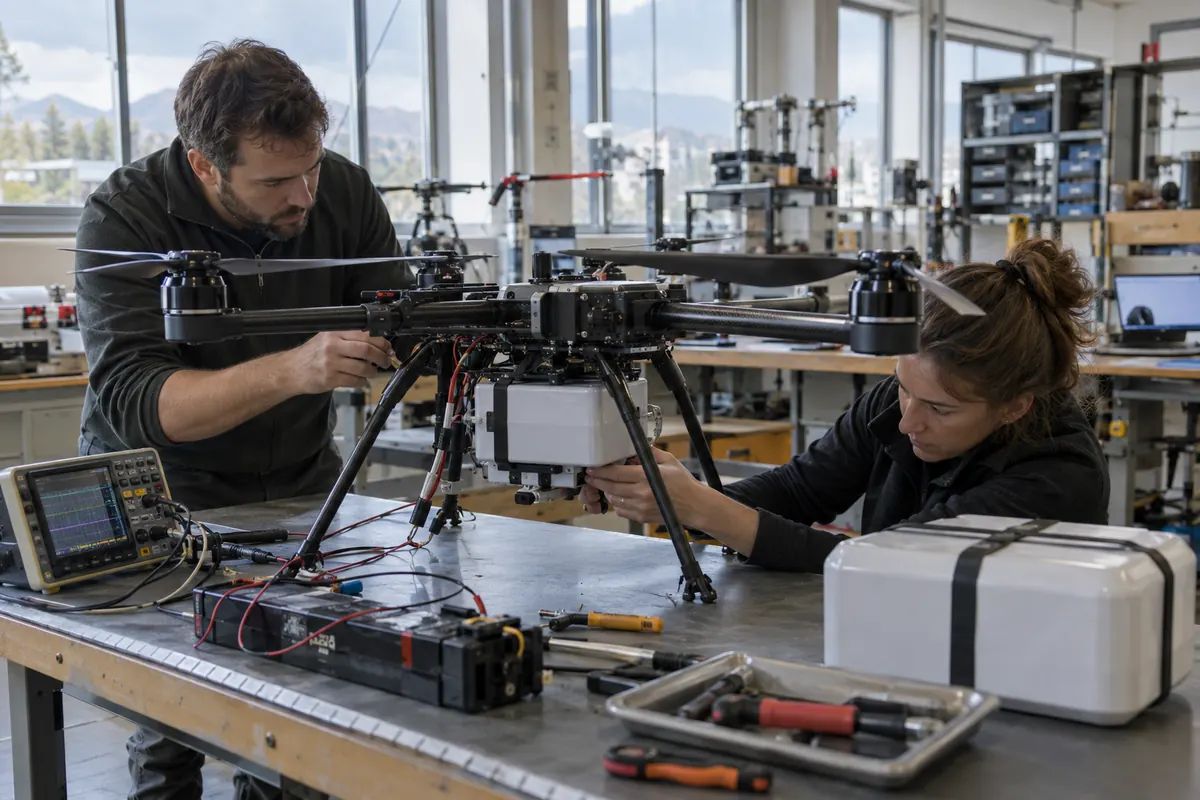
A big goal is only the beginning
Imagine designing a drone to deliver medicine. Its main requirement — a rule the design must meet — says it must carry a specified package between two clinics within a set time.
That gives the team a destination, not a complete design. How powerful must the motors be? How much energy must the battery store? What happens if the landing area is blocked?
Engineers need smaller rules before they can build something dependable.
Break it down, then work out what is missing
Decomposition means breaking a broad requirement into smaller requirements for parts of the system.
For the drone, the team might set limits on package weight, flight time and energy use. These limits must work together. A heavier package could need more energy, leaving less for delays.
But not every smaller rule is simply a piece of the original.
A derived requirement is a new requirement worked out from engineering analysis or a design decision. Suppose the team chooses a battery that could overheat during flight. That choice creates a need to monitor its temperature and respond before it becomes unsafe.
The delivery goal never mentioned battery temperature. The chosen design made that rule necessary.
Give every new rule a reason
A derived requirement should not be a guess disguised as an instruction. Engineers should record:
- What decision or analysis created it.
- Which broader requirement it supports.
- What evidence supports its limits.
- How they will check that the design meets it.
“Keep the battery cool” is too vague. A useful requirement states a temperature limit and the conditions in which it applies. Those values should come from battery evidence and safety analysis, not convenience.
Engineers must also check whether the smaller requirements, taken together, satisfy the original goal. Passing separate motor and battery tests does not automatically prove the drone can complete its delivery.
Keep the reasoning connected
If the route gets longer, the battery rules may need to change. If the battery changes, its temperature limits may change too.
Recording these connections helps engineers find what needs reviewing rather than starting again from memory. It also makes hidden assumptions easier to challenge.
Engineer-approved artificial intelligence (AI) can help suggest missing requirements and flag connections that need review.
Want to see this in practice?
Book a demo